RTO AUDIT
an automotive training unit, audited and rebuilt
A national automotive training unit, audited against its full specification and rebuilt from the ground up: a compliance-ready workbook, a premium visual teaching layer, and an AI diagnosis companion, with every correction traceable to the issue that prompted it.
The product
A training provider's automotive course no longer met the standard, so I checked every requirement against the official specification, found 47 issues, then rebuilt the whole thing: a workbook that passes, premium teaching visuals, and an AI diagnosis companion built on the same guided-diagnosis shape as Diagnostic Buddy.
- Audit + rebuild complete
- 2026
What it is
Training providers have to teach from material that is both legally compliant and genuinely good to learn from. I took one automotive course and put its existing material through a line-by-line check against the official standard, then rebuilt it from the ground up. The result is a workbook that meets the standard, a set of premium visuals that make hard ideas click, and an AI diagnosis companion that carries the same guided-diagnosis shape as Diagnostic Buddy into workshop questions. Before I called any of it finished, I had a second independent pass check my own findings, and I signed off every change myself. Coming from the trade floor and from delivering nationally recognised training, I held it to the bar a real apprentice and assessor would.
The build
The brief
One unit, two jobs, neither done well
A registered training organisation delivers AURTTF105, a nationally recognised automotive unit on diagnosing and repairing engine forced-induction systems. The material in front of students was a single 126-slide PowerPoint doing two jobs at once: classroom delivery deck and self-study workbook.
The engagement split cleanly in two. First, audit the legacy material honestly against the full unit specification. Then rebuild it from the ground up.
The audit
Every requirement, scored against the standard
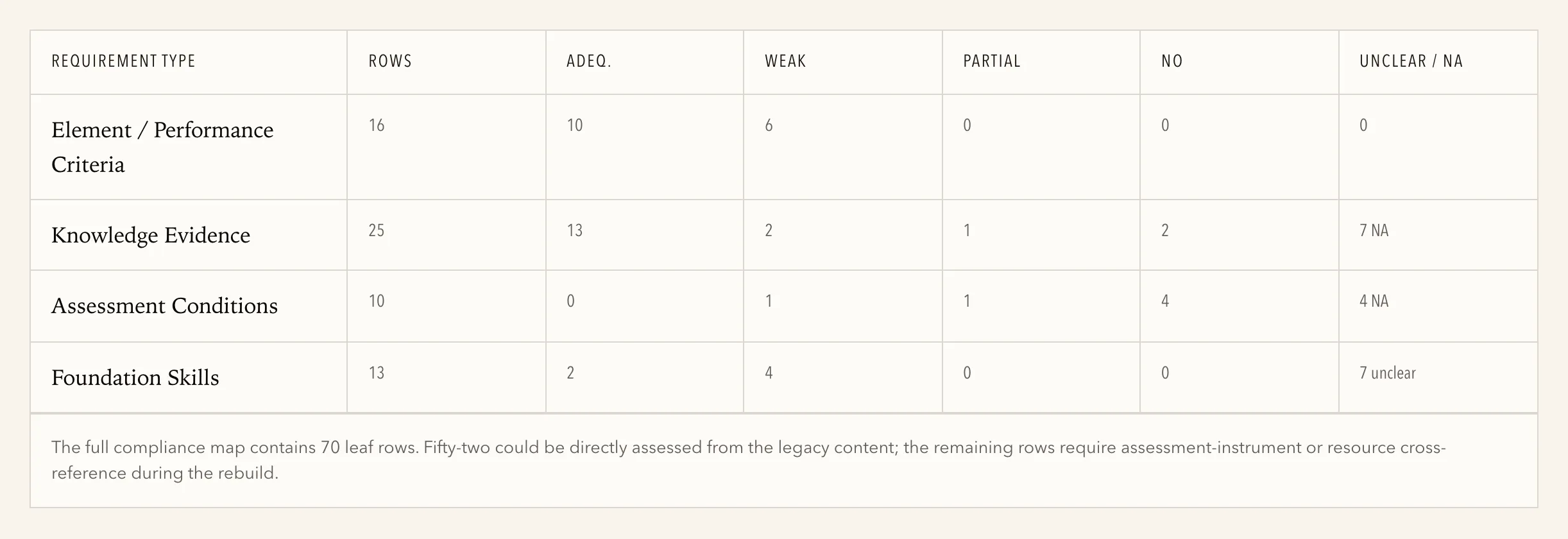
I assessed the legacy file through two independent lenses: compliance coverage, checking each requirement of the unit specification for instructional presence and depth, and teaching quality, judging every slide for pedagogy, currency, and whether it could function as a self-study resource.
Seventy leaf requirements were mapped, fifty-two of them directly auditable from the content. The review logged 47 issues, weighted 3 critical, 21 major, and 23 minor.
The blockers
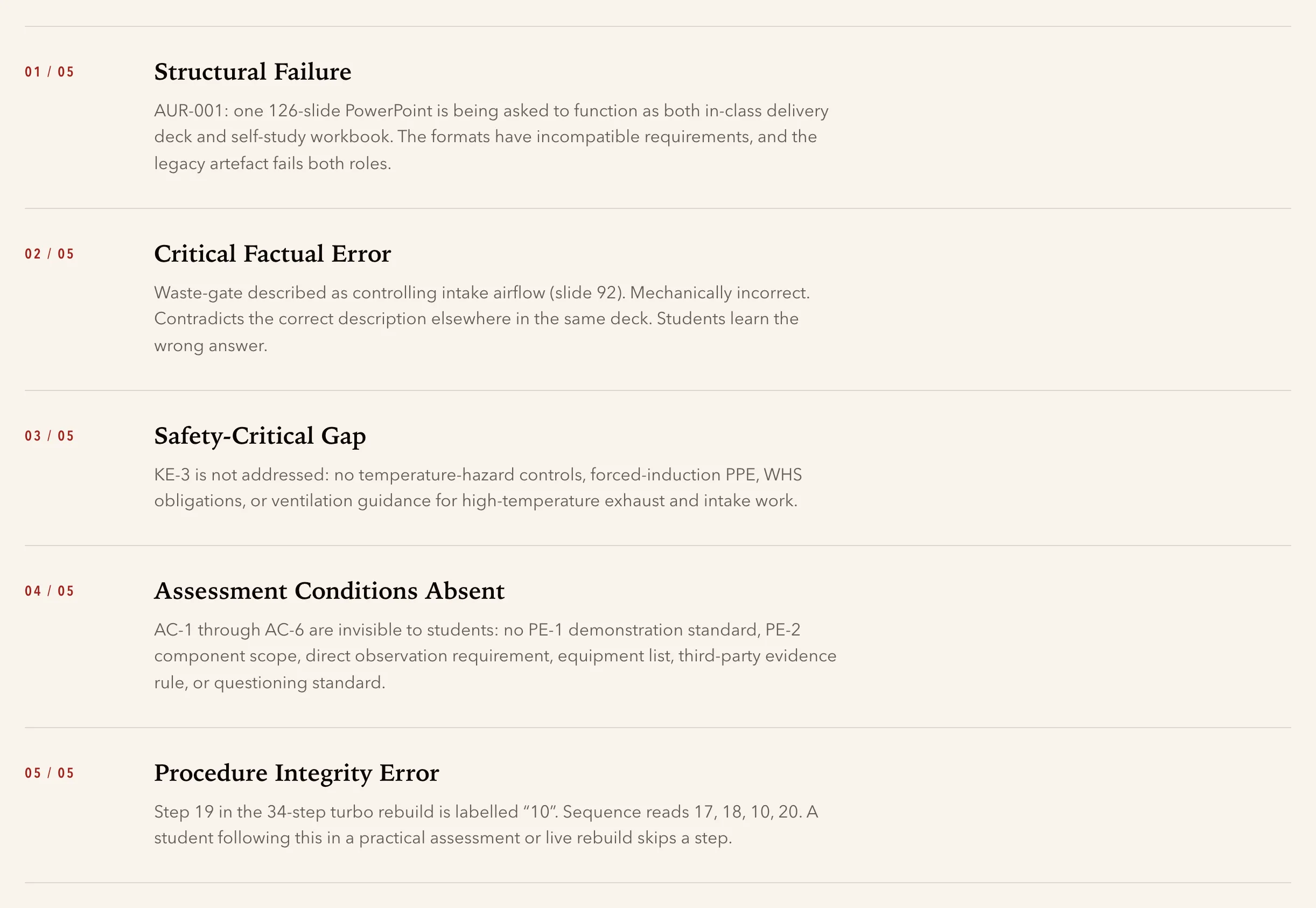
Five faults that made it undeployable
Five issues were severe enough that the material could not responsibly be put in front of a student. A single deck forced to be both lesson and workbook. Waste-gate operation taught incorrectly, contradicting another slide in the same file. No forced-induction safety content at all. Assessment conditions invisible to students. A mis-numbered step in a 34-step turbo rebuild that would have a learner skip a step.
The highest-risk topics failed both lenses at once, which is what turned a list of issues into a deployability judgement.
The workshop AI
A guided-diagnosis workflow, not a chatbot
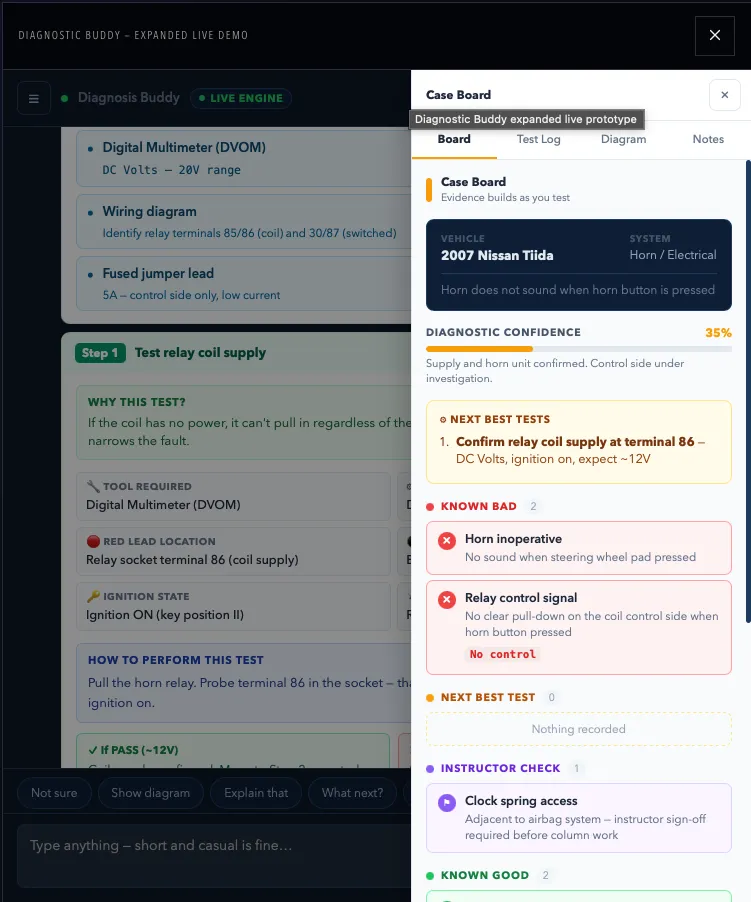
The engagement also scoped an AI diagnosis companion: a guided workflow, not a chatbot, that walks a fixed diagnostic sequence instead of taking open-ended questions.
The interaction is a fixed sequence: describe the fault, gather evidence, follow a prioritised diagnostic path, interpret readings against the unit's own tolerances, then close the job with verification. The same guided-diagnosis shape carries into Diagnostic Buddy.
The rebuild
From one file to a purpose-built workbook
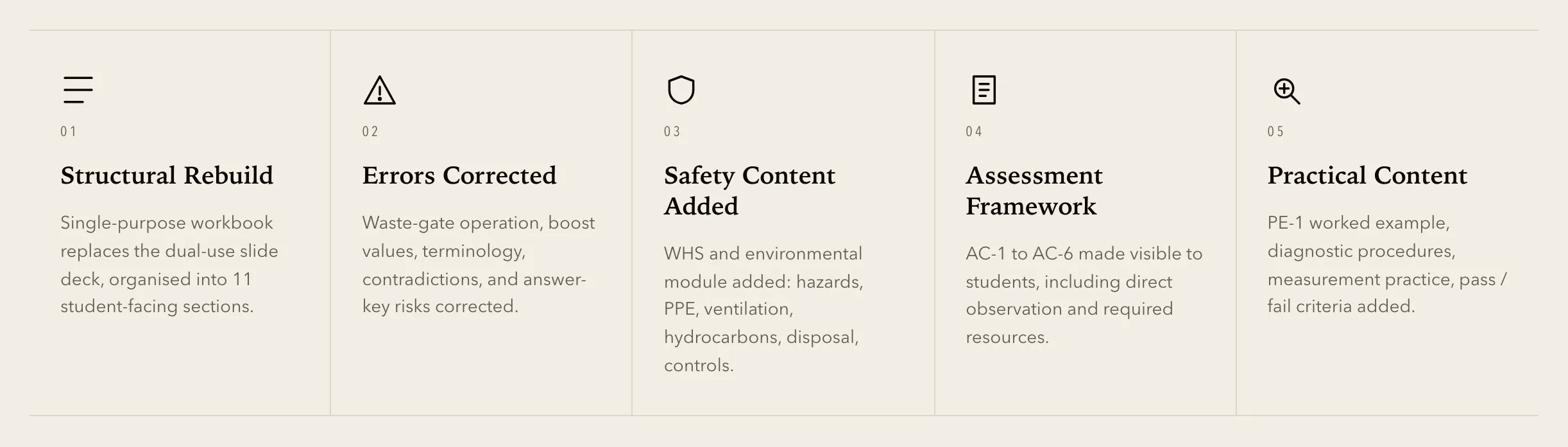
I rebuilt the unit from the ground up as a single-purpose student workbook of eleven structured sections. It closes the confirmed compliance gaps, strengthens the weak rows, corrects every critical and major technical error, and makes the assessment conditions visible to students.
Each change falls into one of five categories, and every one is traceable back to the audit issue that prompted it.
Inside the workbook
Written to be learned from
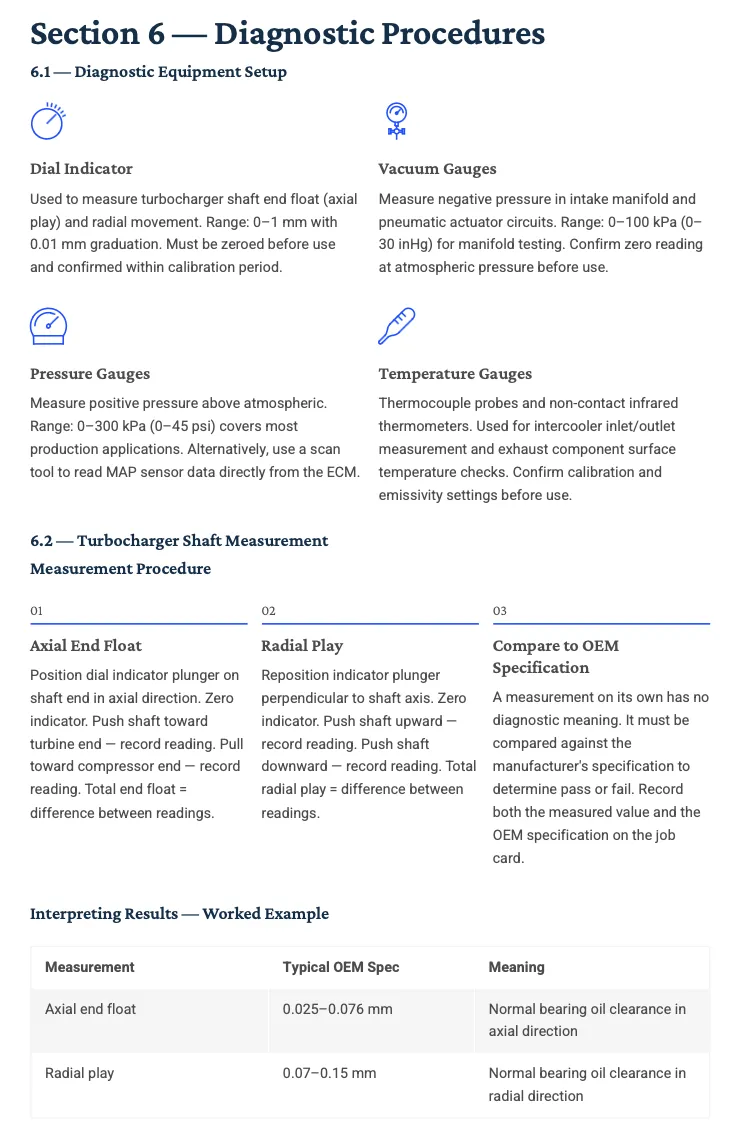
The material reads as student-facing sections rather than presentation slides: a worked diagnostic example, measurement practice, clear pass and fail criteria, and knowledge checks that cross-reference the sections they test.
The premium layer
Hard concepts become visual systems
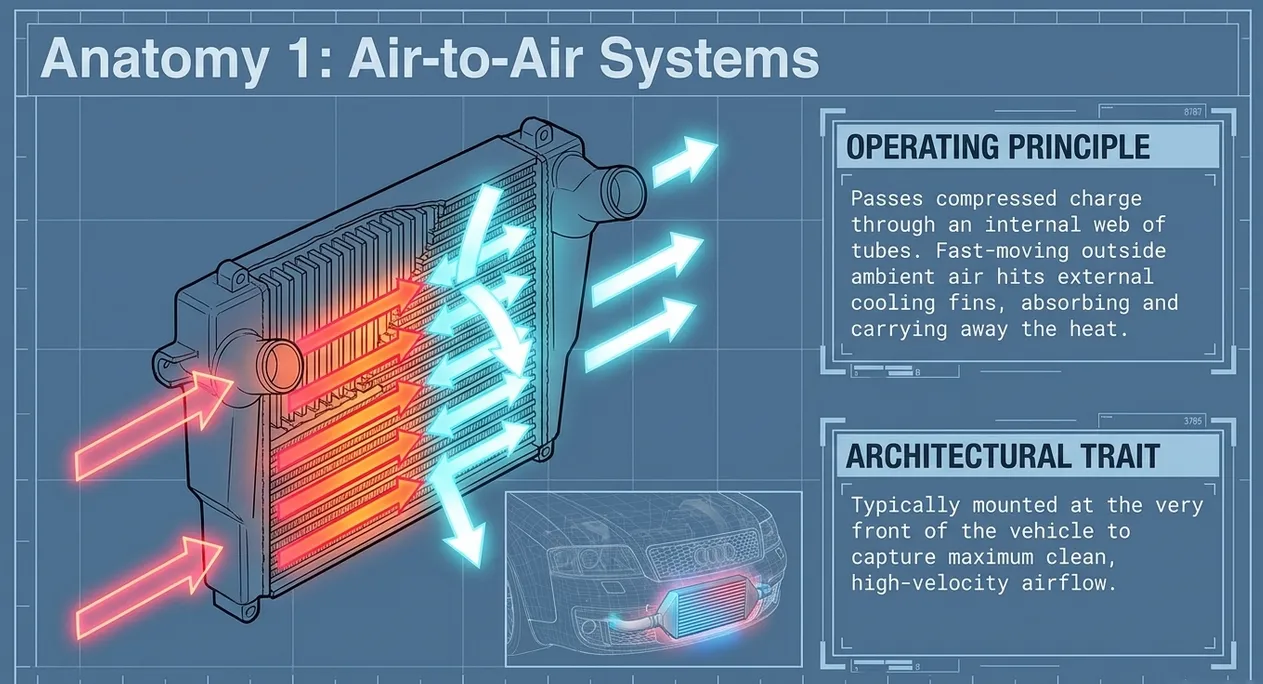
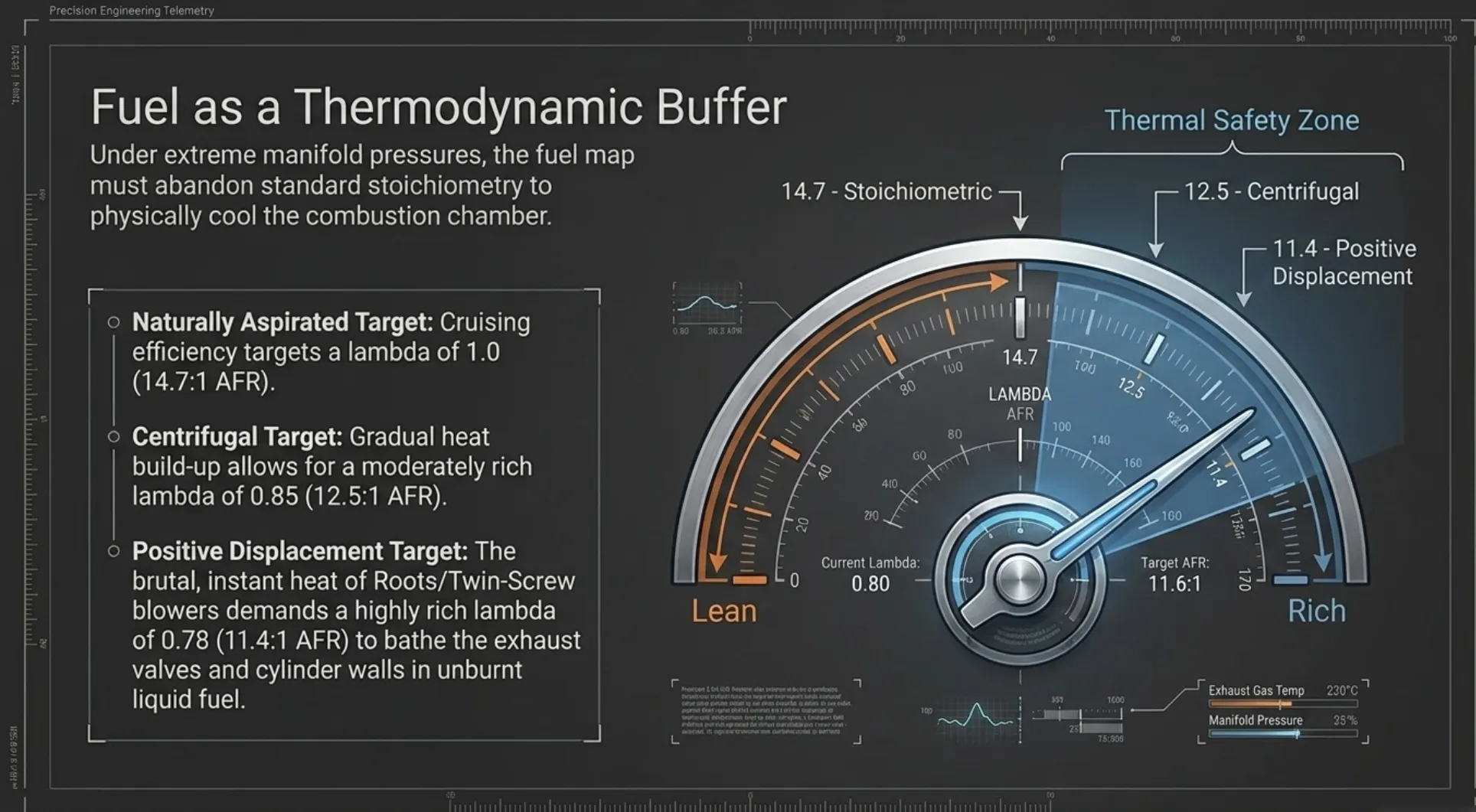
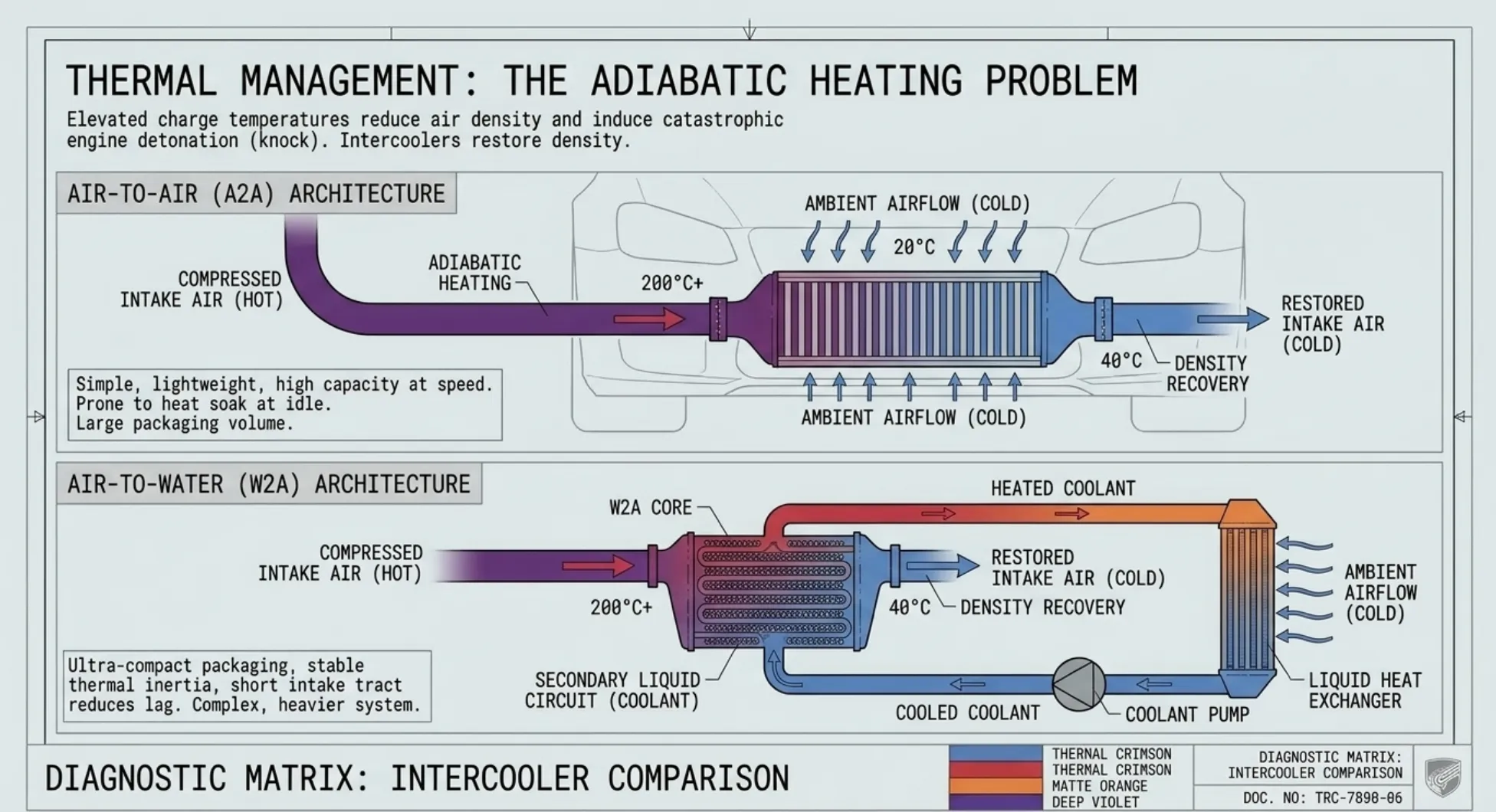
On top of the compliant baseline sits a layer built for the ideas a wall of text never lands. Intercooler theory, the adiabatic heating problem, and fuel as a thermodynamic buffer become systems a learner can see, plus a custom explanatory video produced from the course in its own language and sequence.
Teaching the systems
Air-to-air versus air-to-water
Each forced-induction architecture gets a dedicated visual treatment, so a learner understands the system before moving into testing, interpretation, and fault diagnosis.
At a glance
Legacy, V1, and V2
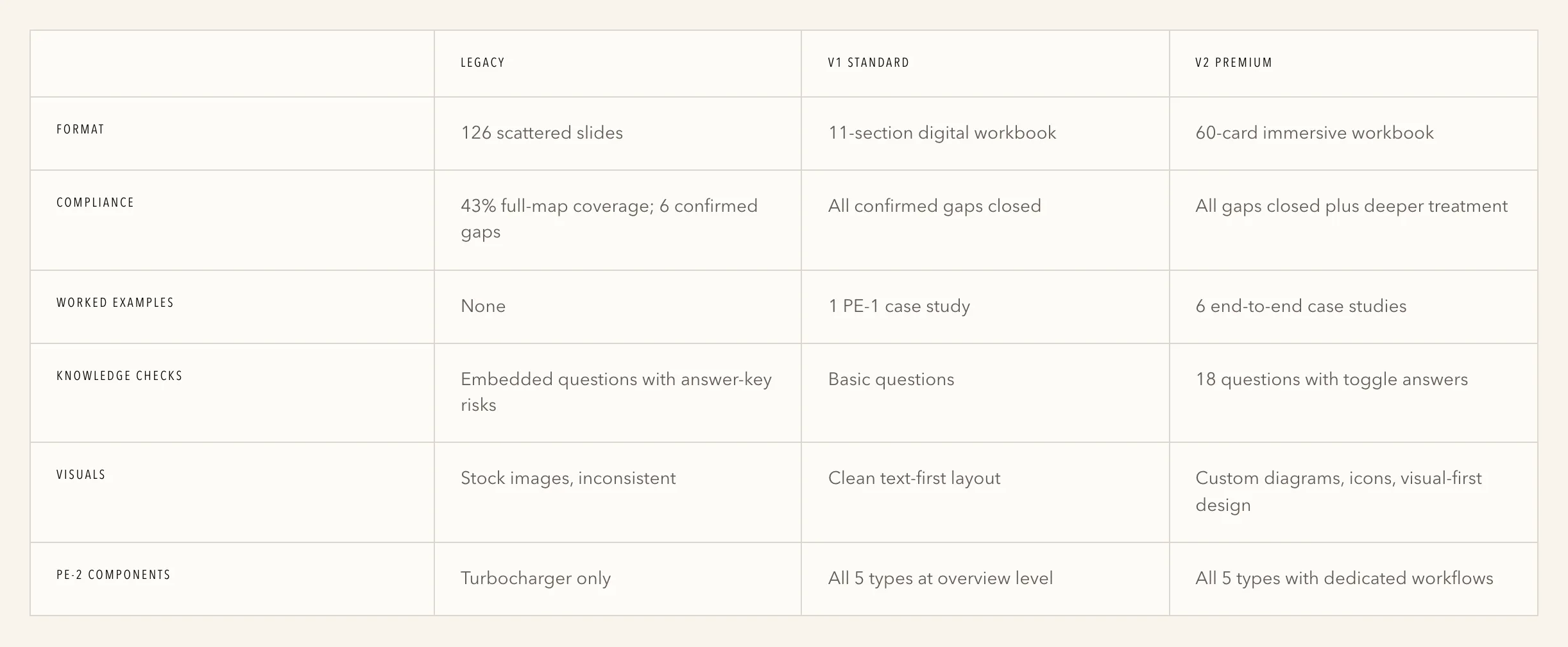
Set side by side, the leap is clear. 126 scattered slides become an eleven-section workbook, then a sixty-card immersive build. Zero worked examples become six. Embedded answer-key risks become checks with toggle answers.
Review of the review
The audit, audited
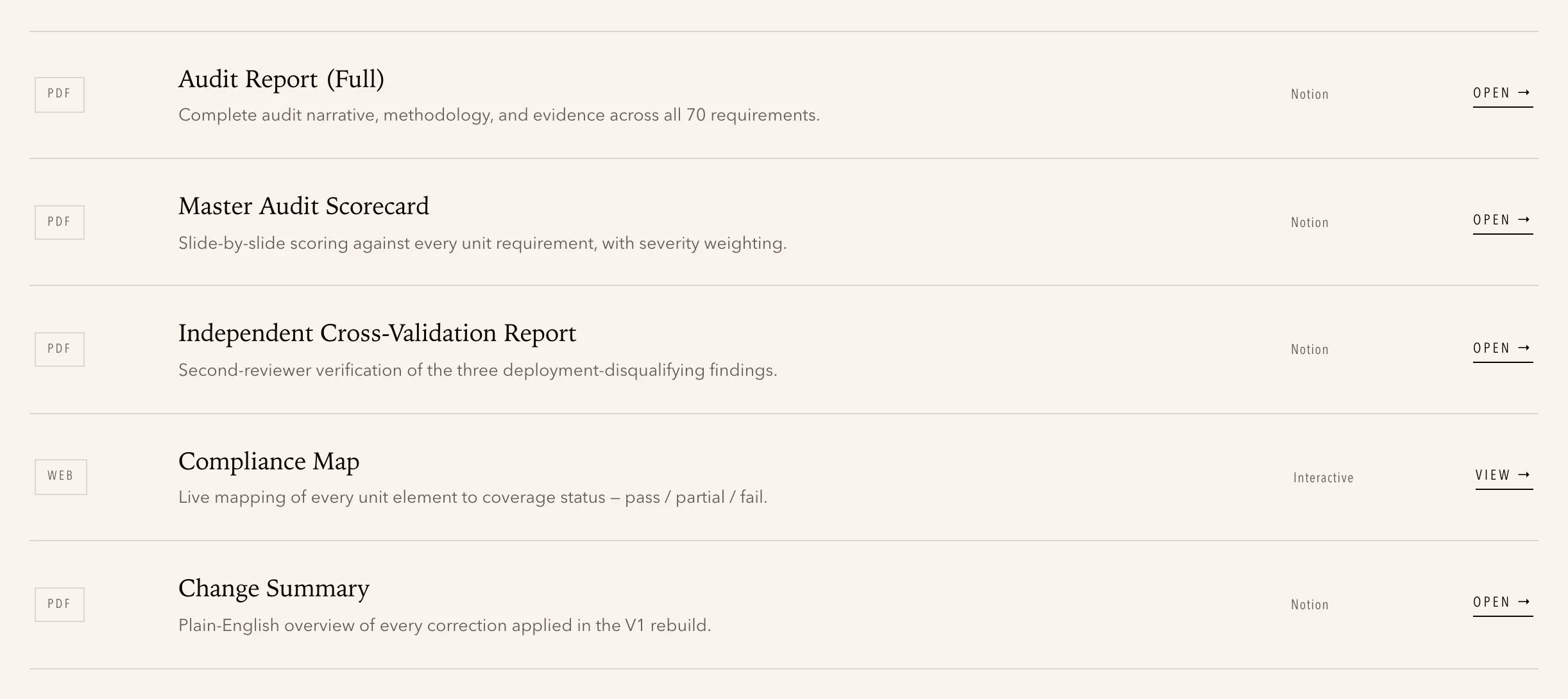
The part I care about most is how the audit was checked. Every output ran through a controlled workflow, then the audit's own findings were re-run through a separate large-context model as an independent cross-validation pass, written up as its own report, with the explicit job of testing the blocking findings before any of them were allowed to stand.
A human operator with RTO delivery, course-writing, and current workshop experience signed off every decision. The evidence chain stays intact end to end: every correction traces to an audit issue, every issue traces to a slide and a requirement.
Where it stands
Complete, and ready
The audit, the compliance map, the rebuilt workbook, the premium teaching layer, and the diagnostic companion are complete and ready for review. What an organisation does with them next is a separate decision, and is theirs to make.
The deliverable is the method as much as the unit: structured ingestion, full compliance mapping, multi-model cross-validation, human review at every decision point, and an AI diagnosis companion. One unit proves it; the same process runs again on the next.